
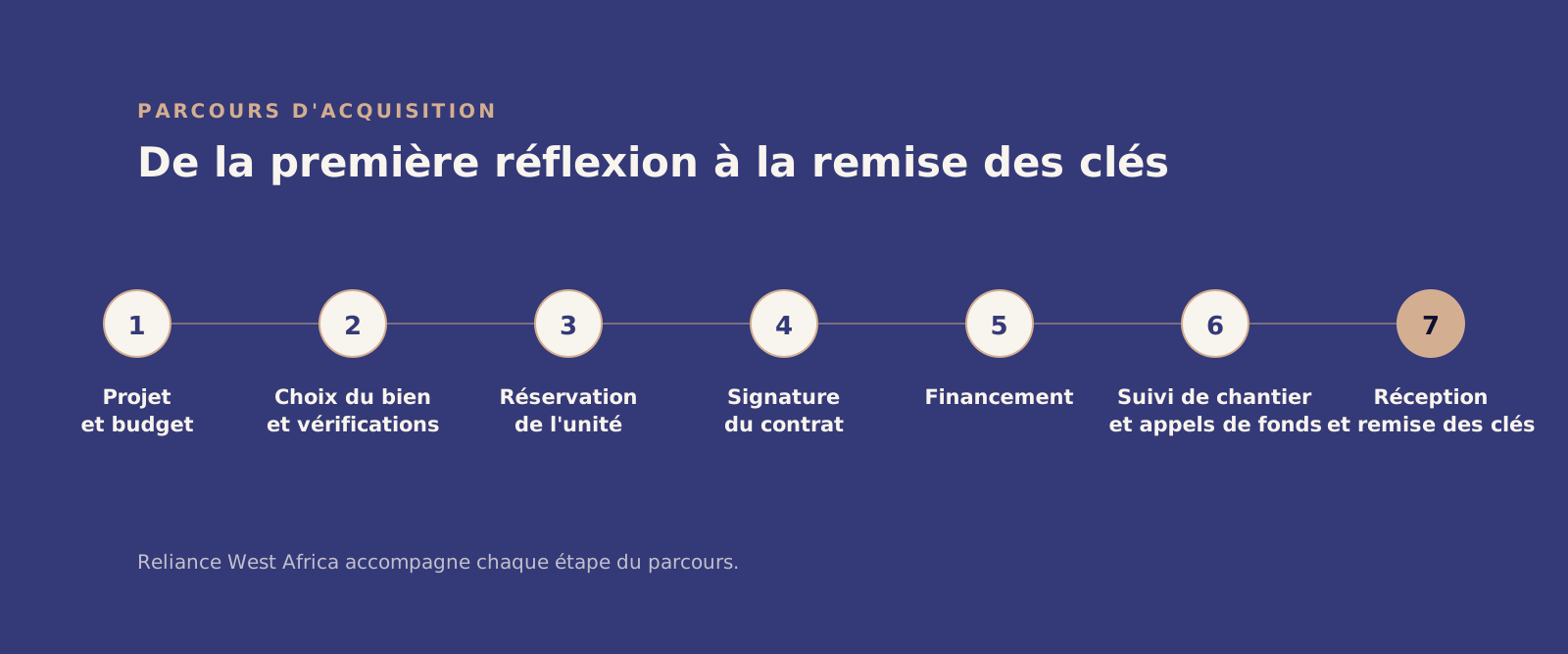
Buying a property can seem daunting when you have never done it before. In practice, the journey follows a straightforward logic, provided you know the steps and take them in the right order. Here they are, from your first thoughts to the handover of the keys.
Step 1: define your project and your budget
Before viewing anything, answer three questions: is this property intended for you to live in, to be rented out, or to be passed on? What total amount can you mobilise (down payment, savings, borrowing capacity)? Over what horizon do you wish to complete the purchase?
These answers determine everything else: floor area, location, financing method. A 54 m² rental unit and a 148 m² family home are not chosen against the same criteria.
Step 2: choose the property and vet the seller
This is the decisive step. Beyond falling in love with a property, always verify the following: the land tenure status of the plot, the developer's legal identity, its track record, and the existence of robust studies (technical studies, environmental and social impact assessment).
A well structured developer will provide these documents without your having to insist. It is, in fact, an excellent test.
Step 3: reserve your unit
Once your choice is made, the reservation secures your unit (floor, orientation, floor area) and its price. It is generally accompanied by a reservation deposit and a written document setting out the terms.
Never pay a deposit without a written document. Never.
Step 4: sign the contract
The contract is the backbone of your purchase. For a property under construction, this is an off plan sale, also known as a sale in a future state of completion. It specifies the exact designation of the property, the price and the payment schedule, the delivery conditions and the guarantees.
Take the time to read it. Have it reviewed by a lawyer or a notary if you wish: a serious developer will take no offence.
Step 5: arrange the financing
Two main routes: staged payment from your own funds, aligned with construction progress, or bank credit, for which your contract and the developer's standing will be decisive assets in the eyes of the bank.
In both cases, it is the quality of your file that makes the difference: signed contract, payment schedule, the developer's legal documents. Prepare it before approaching your bank, not the other way round.
Step 6: follow the construction and meet the payment calls
During construction, you receive progress updates and pay the instalments set out in the contract, in step with the actual progress of the works. This is the sound principle of an off plan purchase: you pay for what has been built.
Keep every document: payment calls, proof of payment, progress reports. This file is your record of the project.
Step 7: take delivery of your property and formalise ownership
The big day: the handover inspection. You check that the property complies with the contract, note any reservations, then receive your keys. What remains are the transfer formalities that make your ownership official, with the support of the notary.
From that point on, the property is yours: to live in, to rent out or to pass on.

A straightforward journey, provided you are well supported
None of these steps is difficult in itself. What makes the difference is the quality of the partner you deal with at each of them.
This article is intended as general information and does not constitute legal advice. As every situation is specific, have the legal aspects of your purchase validated by a legal professional.